
Howdy!
To Start, I wanted to announce our company's introduction into our first contest. Here's what we posted on LinkedIn:
"I'm excited to announce that our team at the Tango Dating Company was selected to be a part of the AI Venture Velocity Challenge being hosted by the Mays Business School - Texas A&M University. There were 531 applications sent in from 160 institutions nationwide, and we're now competing to prove how students around the country are using AI in serious ways to move faster on problems we care about.
I would like to personally thank Levi Belnap for spearheading this directive. As the Executive Director of Entrepreneurship and Innovation, he has transformed how startups can be created and improved upon. We would not have had a solid foundation if it weren't for him.
The Tango Dating Company is honored to be a surrounded by a people who are excited to test, learn, and build alongside entrepreneurs from across the country. From now through June, we’ll be testing assumptions, learning from customers, building faster, and documenting our progress as part of a national cohort of student venture teams. Stay tuned to see what we can accomplish together."
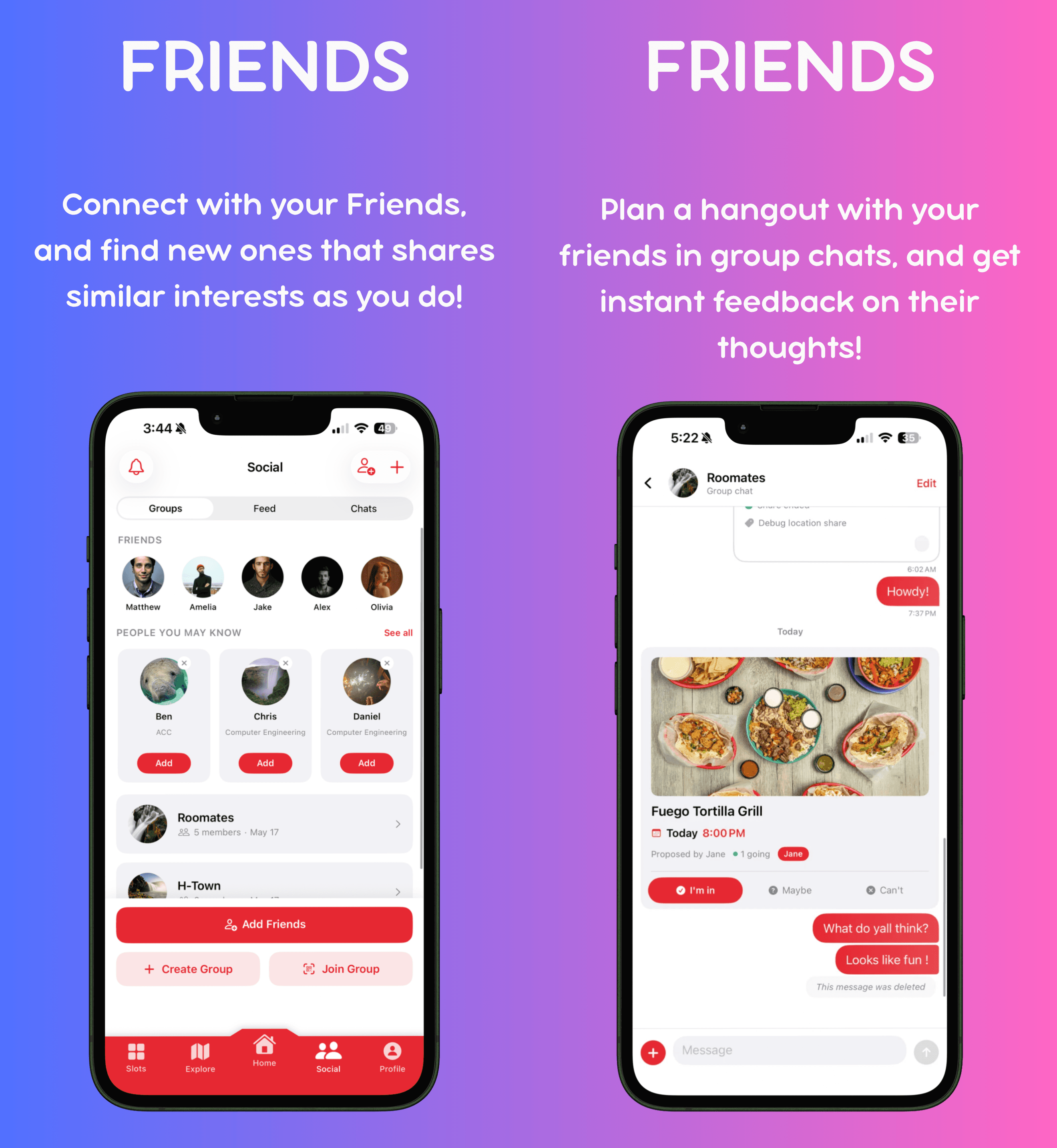
To kickoff our challenge with a great start, I wanted to talk about how we're using AI to speed up the development of TANGO and how we're able to enhance the user experience within the app.
One of the biggest challenges we are tackling within the app development is showcasing a fair and representative version of the local businesses we wish to showcase to our users, both singles and couples. The location information we have used to be very simple, it would just showcase a general price range, some images, a small description, and what hours they are open.
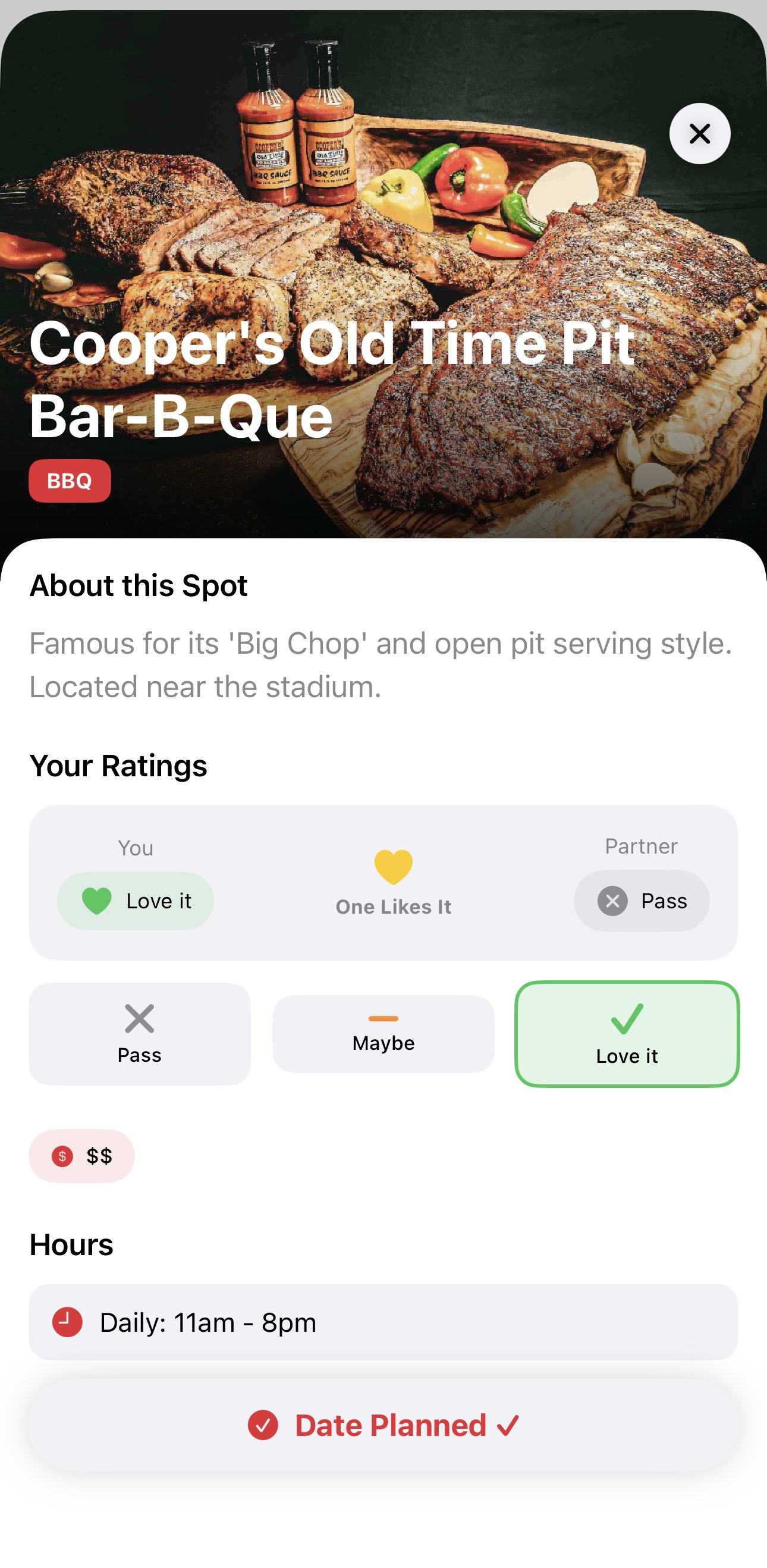
About two months ago, we made a major overhaul to our database that could store a lot more information about these businesses. Some of these additions included an integration to OpenTable to handle reservations, one tap buttons that would take you to the businesses' website, Instagram, or phone number, the ability to see address, and a better estimate of the cost of going.
But the issue wasn't the database, it was gathering the right information for the locations we supported. By now, we have over 50 locations around the College Station and Bryan area, and wanted to be able to roll out this update to our users as quickly as possible, without having a middle version where the old and new locations are shown at the same time. It had to look clean.
This is where agentic AI has helped us immensely. Our team setup the agentic instructions to have Claude search for the information about a business online, using the information it could find from public sources. The hours they were open, the address, the phone numbers, all were publicly available, but would be scattered across websites like Google Business, Yelp, or their own web page.
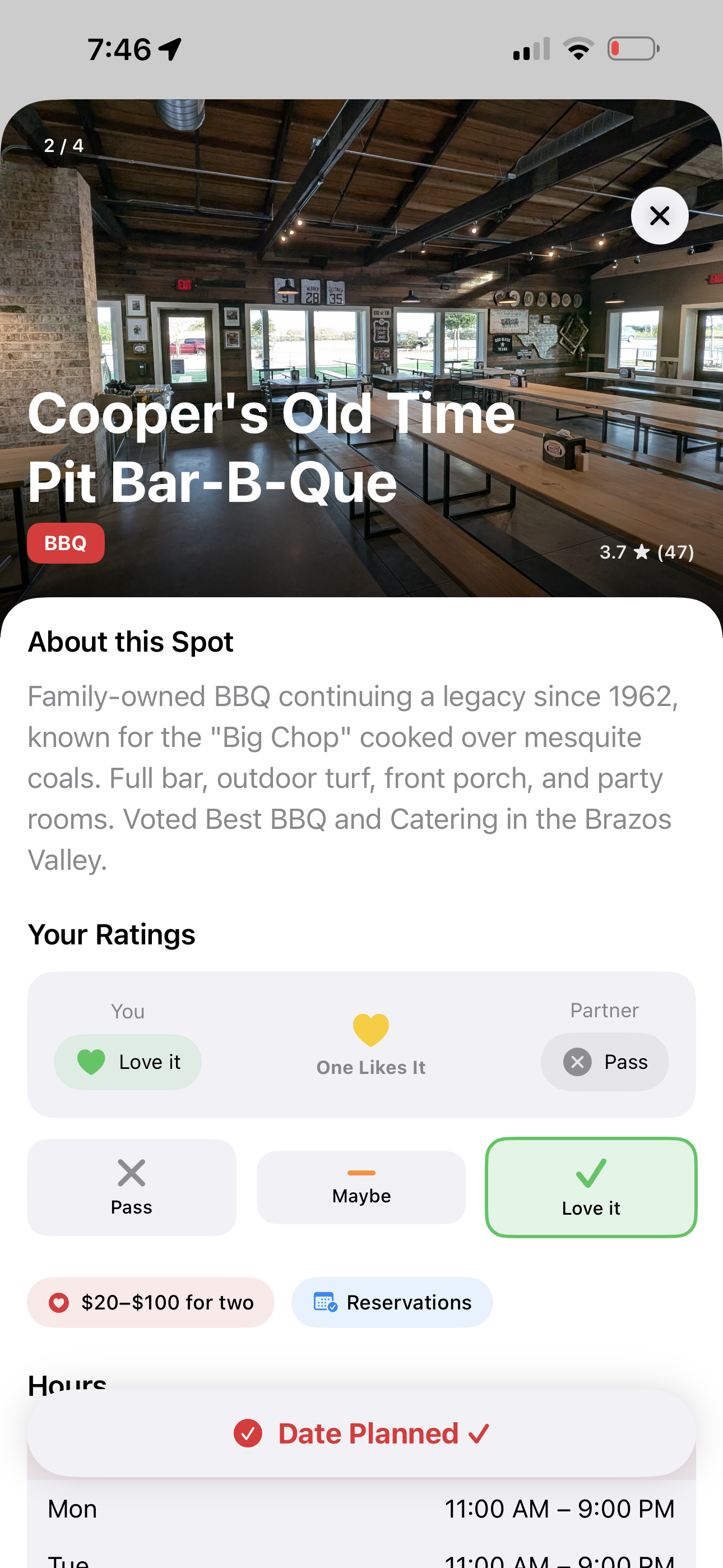
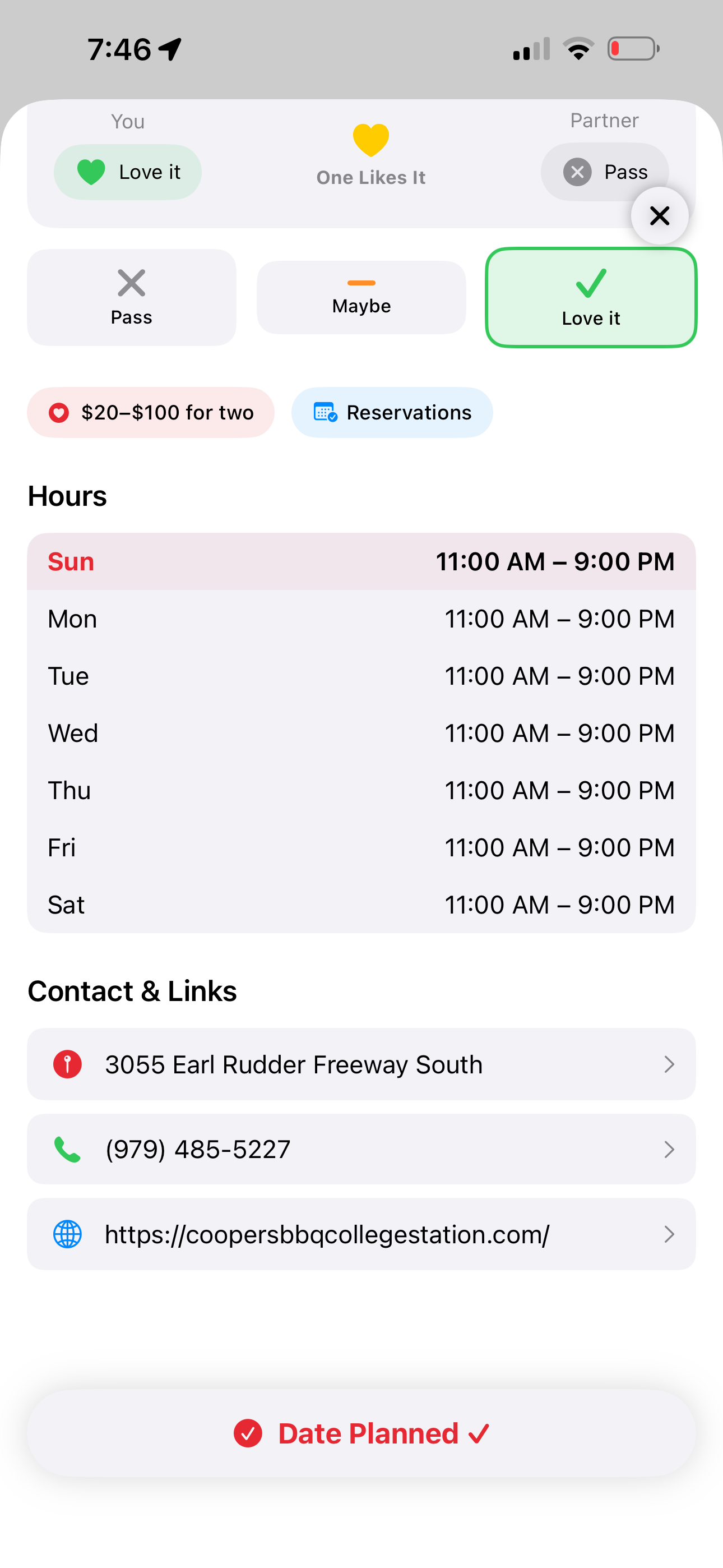
A couple of years ago, the programmers would have to create a web scraper to gather this information and parse it. And what a complex nightmare this would become! What if Yelp changes how the website is showing information? What if there was conflicting information across websites? What happens if a location closed down?
These are all questions the agentic AI from Claude was able to solve for us. It was intelligent enough to understand the information it was gathering from different sites had different priorities, based on relevancy and timing. If a website about visiting college station listed a restaurant with an old time schedule, Claude was able to gather more information from other websites at the same time and weighted how often it appeared on sites like Instagram or Google Search, and conclude which time schedule was the most appropriate.
And something that was to our surprise, it was able to tell us when a location had actually closed! We had initially populated the locations in our database with a travel catalogue about visiting college station, but some of these locations have not been updated on their website! When we tried updating a specific location, it warned us that the location had closed!
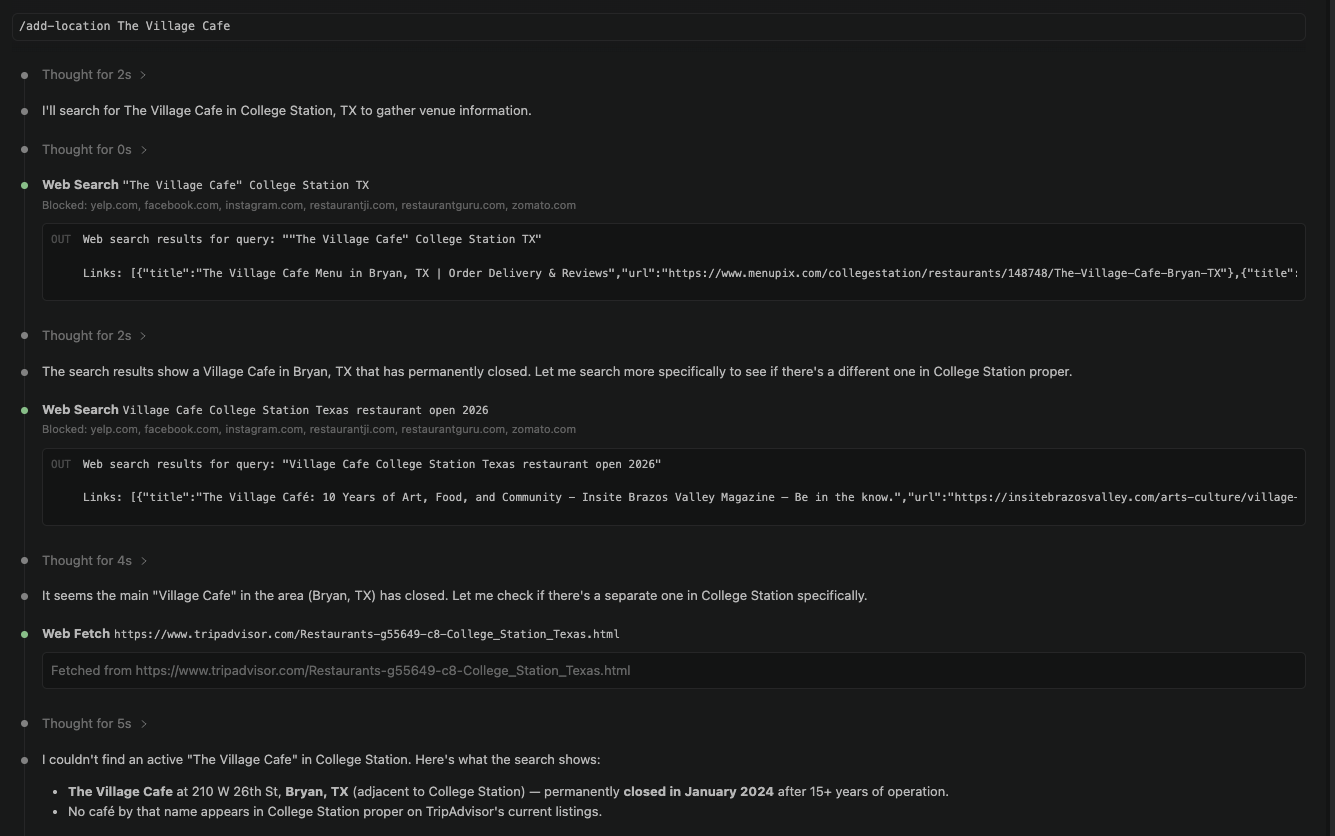
Our team concluded that this agentic tool we had created was a great success. We were able to transform the pace at which we added and updated locations within our database at a minimal cost. We had a member of our team (thanks greg!) spend hours trying to find images and create descriptions under the old model, but the newer version has allowed us to add multiple locations with images, descriptions, etc. at a estimated API cost of only 5 cents per locations! This is a major game changer!
This is just the start for our team. I hope you enjoyed reading this as much as we did enjoy testing and refining a new approach to development with AI tools. Follow us on our socials to stay tuned with our development. Cheers!